CMT Type 2
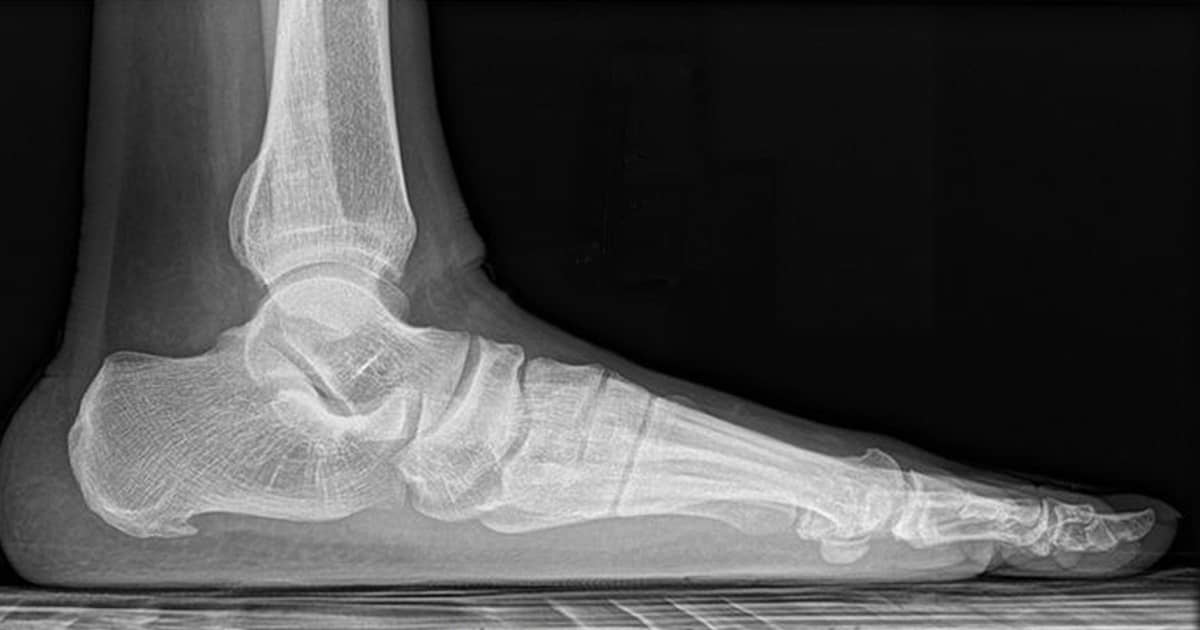
Commonly know as Flat Foot. The pes planus is also known as a valgus deformity or where the foot goes into the position of eversion.
Fortunately for CMT patients, a flexible pes planus foot is easy to correct in comparison to a fixed or rigid pes planus. The pes planus is also known as a valgus deformity or where the foot goes into the position of eversion. Most CMT patients will find it interesting to learn that a large percentage of the general population (who do not have CMT), suffer from pes planus feet. A major distinction between CMT patients and other patients who have pes planus, is that with CMT there is a foot drop or peroneal neuropathy, where the foot does not dorsiflex due to a weakness of the anterior tibialis muscle.
The anterior tibialis muscle is a large muscle on the front of your leg which dorsiflexes or lifts your toes up. With a pes planus foot the calcaneus is usually in a valgus position and the forefoot abducts (points outward). Ideally we want to do the reverse, adduct the forefoot, elevate the arch out of the pes planus position, and maintain that new corrected alignment with stability. If this is done properly it will reduce fatigue, pain, and allow you to increase your walking time. I stress that silicone is critical when doing this kind of correction.
As a sufferer from a pes planus birth defect,
I have a lifetime of experience dealing with it.
If I see you here in my office as a patient I would be glad to show you my foot, the carbon graphite device that I use to correct it, and can tell you what to expect. When I first incorporated my silicone correction system, I was the first patient to test it out. After using this for 2 to 3 months I realized the benefits and then started incorporating it into my new Helios® Orthosis. I now have many patients using the silicone and they can tell you of its benefits.

Pes planus, or pes valgo planus, is a deformity producing a severe flat foot. This deformity mostly takes place at one particular joint, which is the talocalcaneal articulation. When there is a valgus deformity at this joint, there are usually three separate components that are put into effect:
-
1The calcaneus has a valgus position
-
2The head of the talus angulates downward
-
3In relation to the hindfoot, the forefoot is totally abducted
In addition, with this deformity the achilles tendon is normally pulled laterally. This is because of the outward rotation of the calcaneus. The outward rotation of the calcaneus displaces the line of pull of the achilles tendon. The primary muscles that plays a role in this is the gastrocnemius and soleus. The gastrocnemius and soleus muscles are the principal plantarflexors of the foot.
Corrective bracing that takes place especially in the footplate of an orthosis can realign the joints, elevate the head of the talus, and put the calcaneus back into its appropriate position. In time this will ultimately reduce the deviated line of pull of the muscle tendons and slowly let the muscles get back to their normal line of progression. This is assuming that there is no current permanent damage.